smoky maple salmon cakes with sweet-and-spicy sichuan mayo
crispy, protein-rich salmon cakes served over fresh romaine and tomatoes with a creamy, tangy sauce. smoky, satisfying, and genuinely one of those meals that tastes far more indulgent than the effort required.
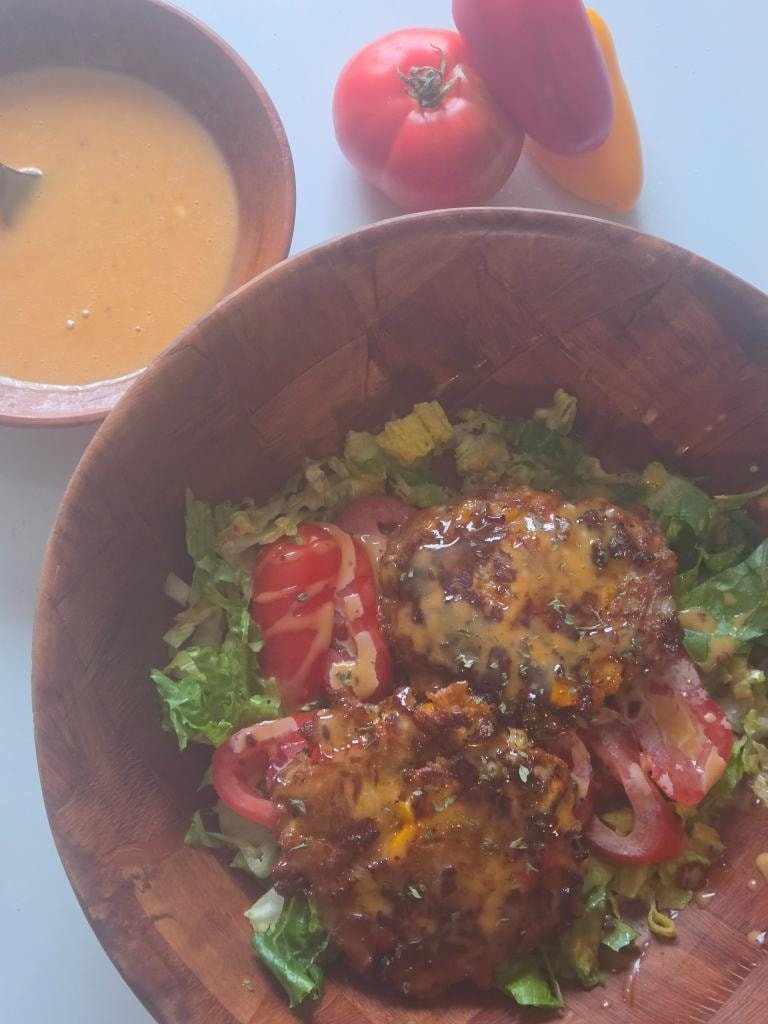
smoky maple salmon cakes served over crisp romaine and ripe tomatoes, finished with sweet-and-spicy sichuan mayo.
this recipe began as a plan for tuna cakes and became something even better.
i had two pouches of maple-smoked pink salmon, gluten-free breadcrumbs, a handful of colorful miniature bell peppers, and the basic ingredients for a creamy, sweet-and-spicy sauce. what came together was smoky, crispy, slightly sweet, savory, fresh, and genuinely one of those meals that tastes far more indulgent than the effort required to make it.
the salmon cakes develop deeply browned edges in the skillet while remaining tender inside. red, orange, and yellow peppers add sweetness, texture, and color. serving the cakes over chopped romaine and fresh tomato keeps the meal bright and crisp, while the whipped sichuan mayo brings everything together with heat, acidity, creaminess, and umami.
this is exactly the kind of meal i want anti-inflammatory cooking to represent: real food, bold flavor, accessible ingredients, and absolutely no sad "diet food" energy.
recipe at a glance
- prep time: 15 minutes
- cook time: 10 minutes
- yield: 4 salmon cakes
- servings: 2 entrée-sized servings
- serving suggestion: 2 cakes over romaine and tomato with approximately 1 tablespoon of sauce
why this meal works
two salmon pouches provide 32 grams of protein before the egg, breadcrumbs, and vegetables are added. the salmon also supplies vitamin D and long-chain omega-3 fatty acids.
the romaine, peppers, onion, garlic, and tomato provide fiber, volume, texture, and a range of plant nutrients. red and green peppers and tomatoes are recognized food sources of vitamin C, an antioxidant that helps protect cells from oxidative damage.
the result is a balanced plate containing protein from salmon and egg, fiber and carbohydrates from vegetables and breadcrumbs, unsaturated fats from salmon and olive oil, and enough flavor that additional table salt is unnecessary.
ingredients
for the smoky maple salmon cakes
- 2 pouches Chicken of the Sea Maple Smokehouse pink salmon
- 1 large egg
- ⅓ cup gluten-free breadcrumbs, plus more if needed
- ½ small onion, finely chopped
- 3 miniature bell peppers in mixed colors, finely chopped
- 1 teaspoon jarred minced garlic
- salt-free table-blend seasoning, to taste
- freshly ground black pepper, optional
- 1 tablespoon extra-virgin olive oil
- dried parsley for garnish, optional
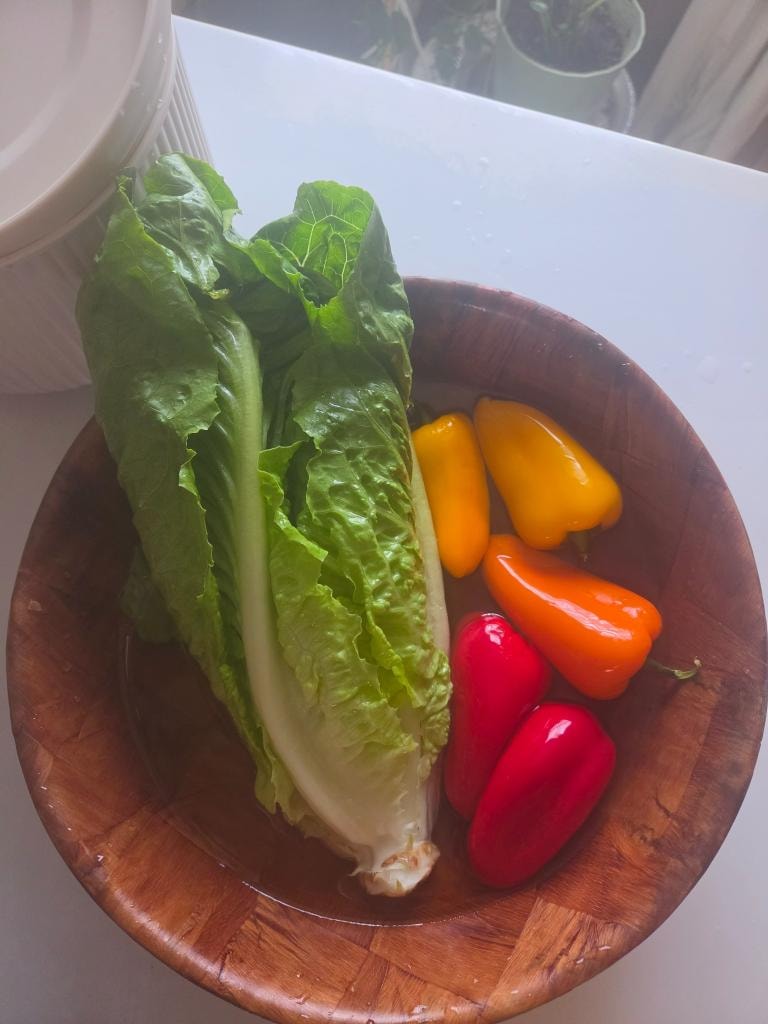
fresh romaine and colorful miniature peppers add crunch, fiber, color, and natural sweetness.
for the salad
- approximately 4 cups chopped romaine lettuce
- 1 medium tomato, sliced
- additional miniature bell peppers for serving, optional
for the sweet-and-spicy sichuan mayo
- ⅓ cup mayonnaise
- 1 tablespoon Fly By Jing Sweet + Spicy Sichuan Chili Sauce
- 1 teaspoon rice vinegar
- ½ teaspoon less-sodium soy sauce
- ¼ teaspoon jarred minced garlic
- 1–2 teaspoons water, as needed for thinning
instructions
1. prepare the vegetables
finely chop the onion and three miniature bell peppers. smaller pieces will help the cakes hold together and ensure the vegetables soften evenly.
warm approximately half of the olive oil in a skillet over medium heat. add the onion and peppers and sauté for 3–4 minutes, until they begin to soften. add the minced garlic and cook for another 30 seconds. remove from heat and allow to cool slightly.
2. mix the salmon cakes
add the salmon, sautéed vegetables, egg, breadcrumbs, salt-free seasoning, and black pepper to a mixing bowl. gently combine without overworking the salmon. allow the mixture to rest for several minutes so the breadcrumbs can absorb some of the moisture.
test a small amount in your hand — it should hold its shape when pressed. add another tablespoon or two of breadcrumbs only if needed.
3. shape the cakes
divide the mixture into four equal portions. shape each into a thick patty, pressing the edges together firmly. for cakes that are easier to flip, refrigerate for 10–15 minutes before frying.
4. pan-fry
add the remaining olive oil to the skillet and warm over medium heat. place the salmon cakes in the pan without crowding. cook for approximately 3–4 minutes on the first side, leaving them undisturbed long enough to develop a browned crust. carefully flip and cook for another 3–4 minutes, until both sides are deeply golden and the centers are hot and firm.
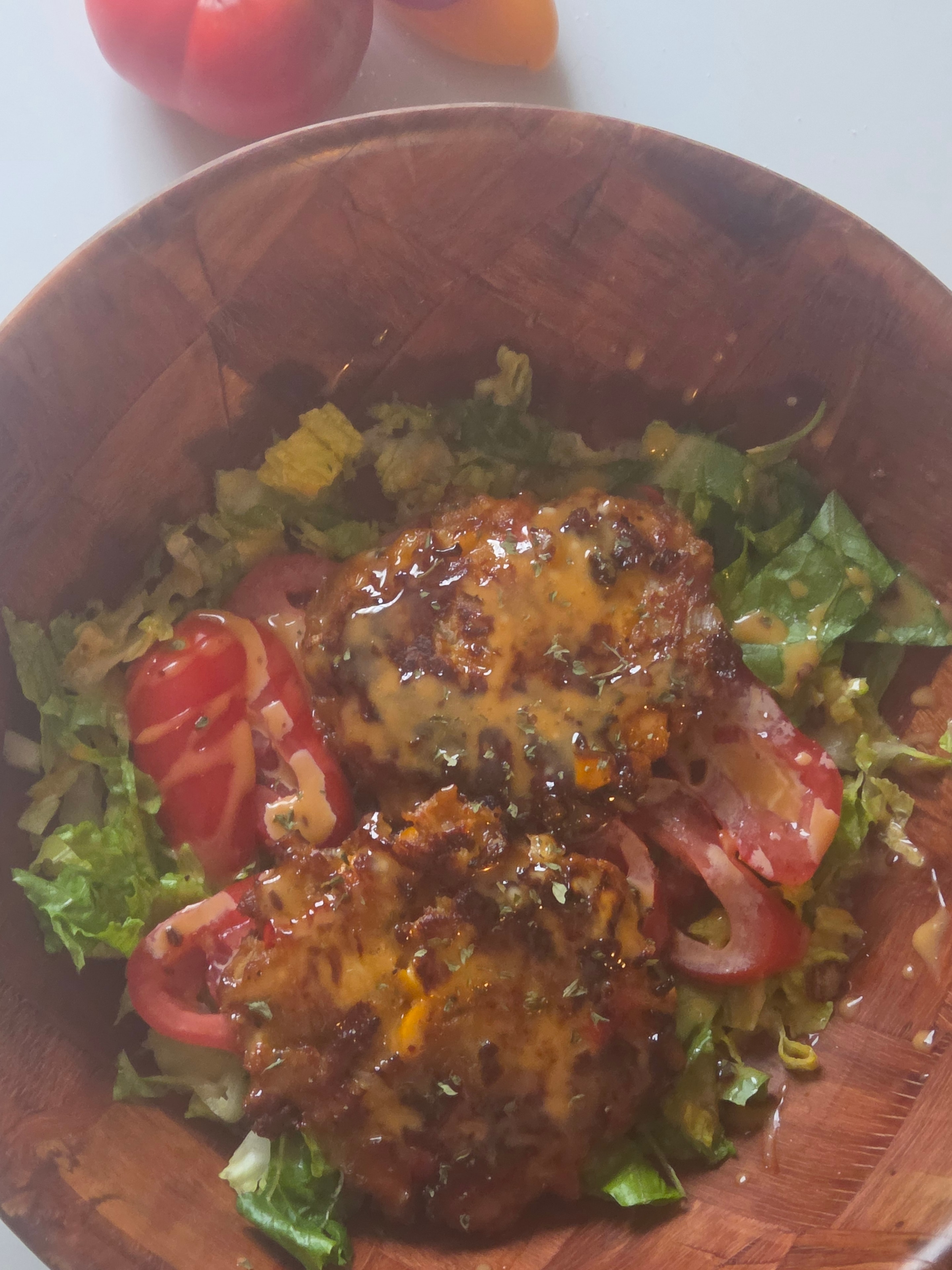
the finished cakes have crisp, caramelized edges, tender centers, and pieces of colorful peppers throughout.
5. whip the sauce
in a small bowl, whisk together the mayonnaise, sichuan chili sauce, rice vinegar, soy sauce, and garlic. add water one teaspoon at a time until the sauce is thin enough to drizzle but still creamy. taste before adding anything else — the salmon, sichuan sauce, soy sauce, and mayonnaise already contain sodium.
6. assemble
divide the chopped romaine and tomato between two bowls. place two warm salmon cakes over each salad. drizzle with approximately 1 tablespoon of the sichuan mayo and finish with dried parsley, if desired. serve additional sauce on the side.
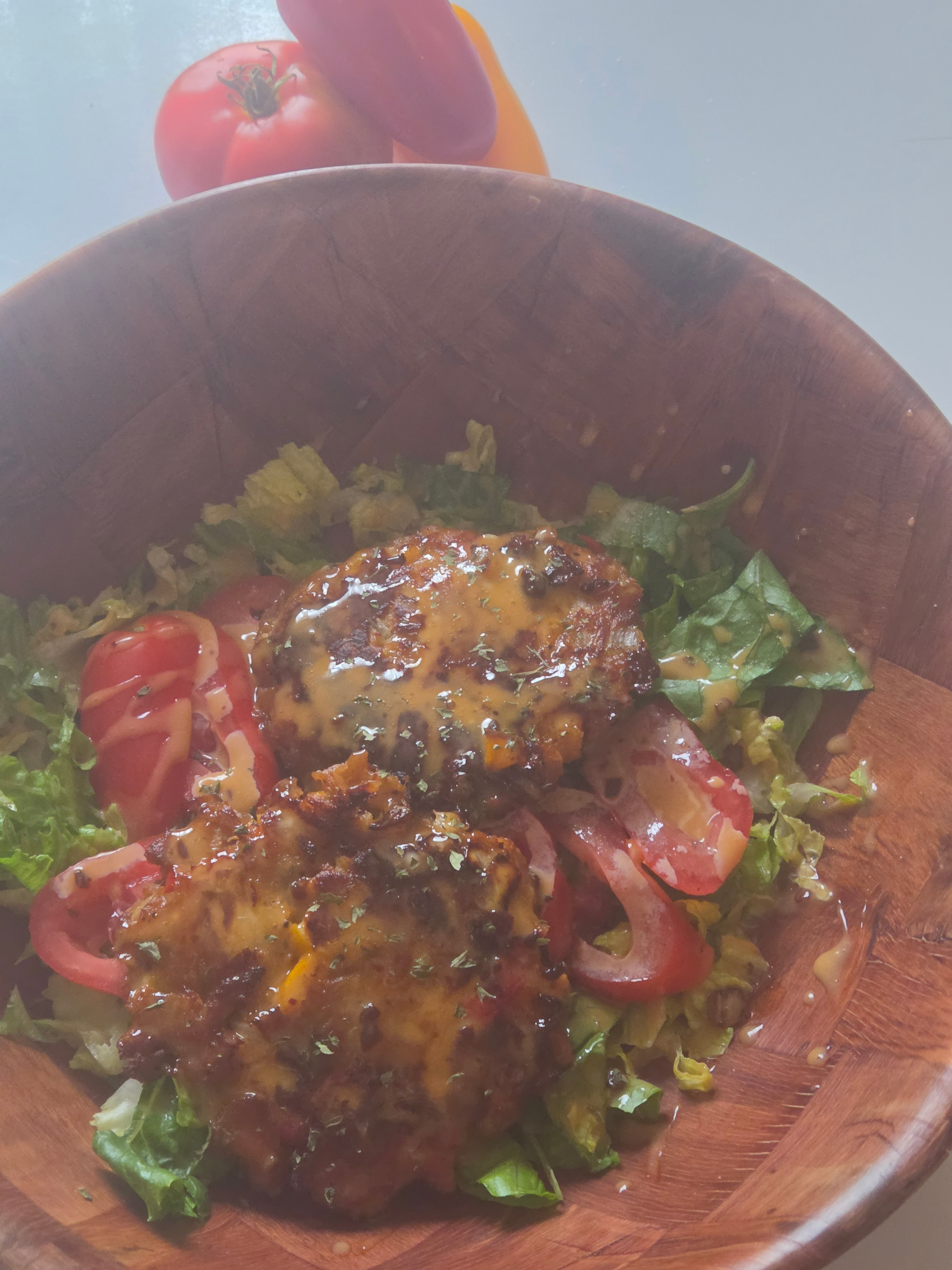
the finished cakes over crisp romaine and ripe tomatoes, finished with sweet-and-spicy sichuan mayo.
estimated nutritional value
per entrée serving (2 salmon cakes, half the romaine and tomato, approximately 1 tablespoon of sauce)
| nutrient | estimated amount |
|---|---|
| calories | approximately 385 |
| protein | approximately 23 grams |
| total carbohydrates | approximately 31 grams |
| dietary fiber | approximately 5–6 grams |
| total fat | approximately 19–20 grams |
| sodium | approximately 765–775 mg |
nutrition information is an estimate rather than a laboratory analysis. values will vary by product, measurement, portion size, cooking method, and the amount of oil and sauce consumed.
how this fits an anti-inflammatory eating pattern
no single meal can instantly "turn off" inflammation, and food should not be presented as a replacement for medical treatment. an anti-inflammatory approach is built through a consistent eating pattern that emphasizes fish, vegetables, fiber, unsaturated fats, and a variety of minimally processed foods.
salmon and omega-3 fatty acids — salmon contains EPA and DHA, two long-chain omega-3 fatty acids involved in cell membranes and the production of signaling compounds that help regulate inflammatory responses.
colorful vegetables and antioxidants — the miniature bell peppers and tomato provide vitamin C and other naturally occurring plant compounds. rather than depending on a supplement or wellness powder, the nutrients are coming from ordinary foods that are accessible and easy to recognize.
extra-virgin olive oil — lightly pan-frying the cakes in extra-virgin olive oil creates a crisp exterior while adding mostly unsaturated fat. the goal is not to eliminate fat — fat contributes flavor, supports satisfaction, and helps make meals feel complete.
why it can be considered PCOS-friendly
"PCOS-friendly" does not mean that a recipe cures PCOS, balances hormones on its own, or works identically for every person. the 2023 International Evidence-Based PCOS Guideline recommends sustainable healthy eating tailored to the individual.
this recipe can fit a PCOS-supportive eating pattern because it combines a substantial serving of protein, several servings of non-starchy vegetables, approximately 5–6 grams of fiber, moderate carbohydrates, and fats that help make the meal satisfying — without feeling restrictive.
an honest sodium note
although i did not add regular seasoning salt to the salmon mixture, this recipe is not technically low sodium. each Maple Smokehouse salmon pouch contains 480 mg of sodium, and two pouches contribute 960 mg to the full batch. the estimated entrée serving contains approximately 765–775 mg of sodium.
the responsible description for this recipe is: made without unnecessary added salt and adaptable for a lower-sodium eating pattern.
lower-sodium adaptation: replace the Maple Smokehouse salmon with two low-sodium plain salmon packets (140 mg per packet instead of 480 mg), omit the soy sauce from the mayo, and add smoked paprika and a small amount of maple syrup to recreate the smoky-sweet flavor. this brings the estimate closer to approximately 410–430 mg per serving.
substitutions and variations
for more protein — add one egg white to the mixture. because this adds moisture, another tablespoon or two of breadcrumbs may be needed.
for a fully gluten-free version — the Schär breadcrumbs are gluten-free, but the Fly By Jing sauce contains wheat. use a certified gluten-free sweet-chile sauce and certified gluten-free tamari, or omit the soy-based ingredient entirely.
for less heat — reduce the sichuan sauce to 1–2 teaspoons and add additional rice vinegar or mayonnaise.
for more heat — add another teaspoon of sichuan sauce to the finished mayo or spoon a small amount directly over the cakes.
without maple-smoked salmon — use plain canned or pouched salmon and add 1–2 teaspoons pure maple syrup, ½ teaspoon smoked paprika, garlic powder, onion powder, and black pepper. this gives you more control over both sweetness and sodium.
these salmon cakes are crisp, smoky, savory, colorful, protein-rich, and finished with a sauce that makes the entire bowl taste restaurant-worthy.
more importantly, this recipe shows what anti-inflammatory cooking can look like in real life. it does not require perfection, expensive wellness powders, complicated restrictions, or food that tastes like punishment. it can begin with salmon from a pouch, vegetables from the refrigerator, pantry breadcrumbs, and a sauce you genuinely look forward to eating.
supporting your body should still taste amazing.
nourish well. live fully.
♡ Shannon
this recipe is intended as general food and wellness information. it is not medical nutrition therapy and should not replace individualized guidance from a physician or registered dietitian, particularly for anyone managing PCOS, diabetes, hypertension, kidney disease, food allergies, or another medical condition. allergens in the photographed version: fish, egg, wheat, soy, and sesame. product formulations can change, so labels should be checked each time.
Explore Topics
share this post
Written by
Shannon
Sharing through writing about trauma healing, nervous system regulation, yoga, reiki, holistic nutrition, and PCOS — through a trauma-informed lens.