yoga for the days you can't get off the floor
A gentle, honest guide to moving your body when everything feels heavy — no mat required, no performance expected.
yoga for the days you can't get off the floor
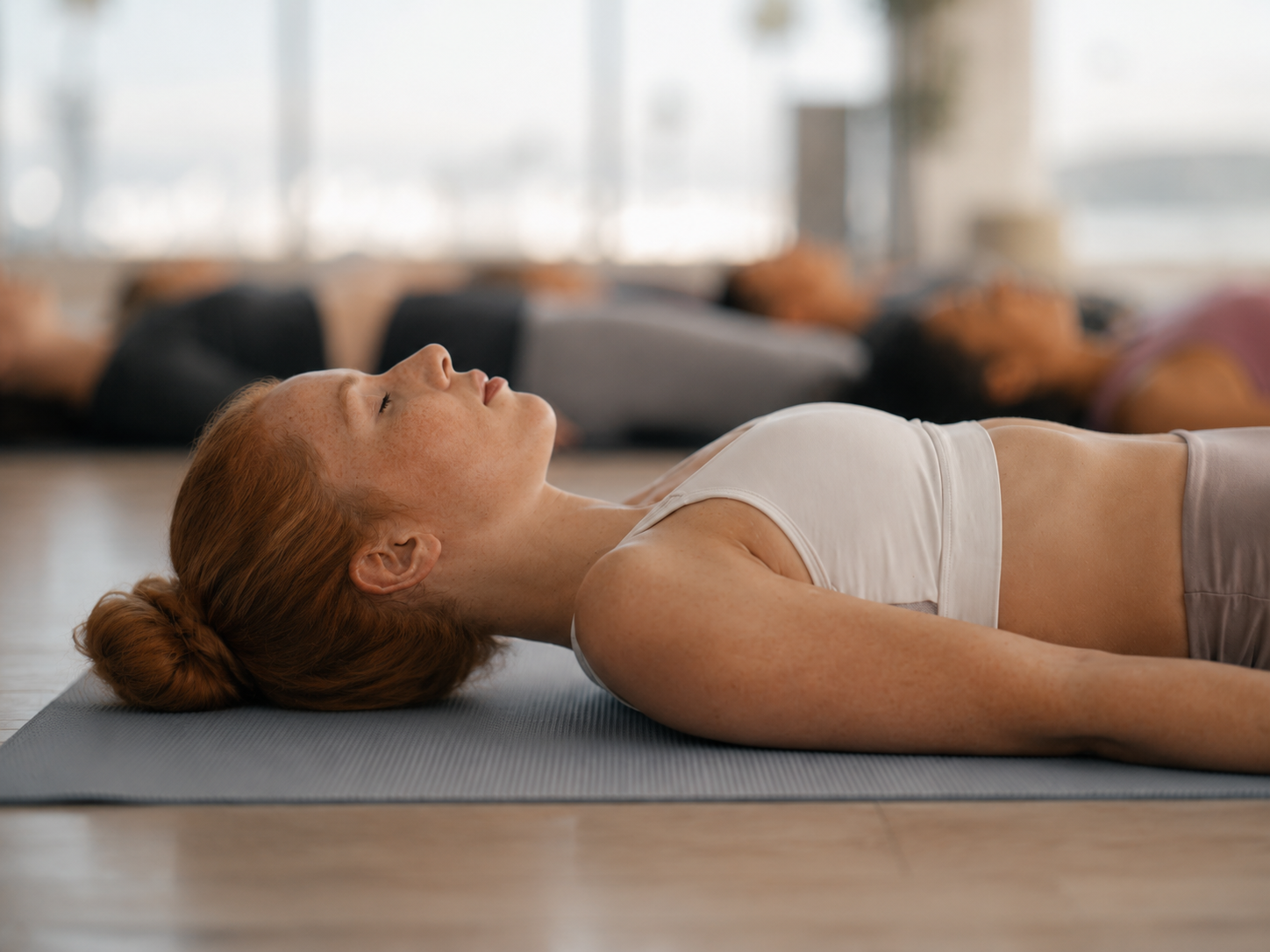
Some days, the floor is where you need to be.
Not as a failure. Not as a setback. But as a completely valid place to exist while your nervous system does what it needs to do.
Traditional yoga culture doesn't always make space for this. There's a lot of "push through" and "show up anyway" energy that, for people healing from trauma, can actually do more harm than good. Your body has been through things. Sometimes it needs stillness more than it needs a sun salutation.
This is a different kind of yoga guide. One that starts where you actually are.
first: permission to stay down
Before we talk about any movement at all, I want to give you explicit permission to not move.
If you're in a flare — emotional, physical, or both — rest is not laziness. It's regulation. Your nervous system cannot heal while it's in survival mode, and forcing movement when you're dysregulated can actually reinforce the pattern you're trying to heal.
So if today is a day where the most you can do is breathe, then breathe. That counts. That is the practice.
breath as the foundation
Everything in trauma-informed yoga starts with the breath — not because it's a cliché, but because it's the one thing you can always come back to.
Try this: place one hand on your chest and one on your belly. Breathe in slowly through your nose for a count of four. Hold for a moment. Exhale through your mouth for a count of six.
Notice what happens. You don't have to fix anything. Just notice.
This is the practice. Everything else is optional.
floor-based movement for heavy days
If you want to move but can't imagine standing up, here are some gentle options that work exactly where you are.
knees to chest (apanasana) Lying on your back, draw both knees into your chest. Rock gently side to side if that feels good. This releases the lower back and activates the parasympathetic nervous system — your body's rest-and-digest mode.
supine twist From knees to chest, let both knees fall to one side. Extend your arms out in a T shape. Stay here for several breaths. This is one of the most releasing postures in yoga — it wrings out tension from the spine and hips, where a lot of trauma is stored.
legs up the wall (viparita karani) Scoot your hips close to a wall and extend your legs up. This is deeply restorative. It calms the nervous system, reduces anxiety, and requires absolutely nothing from you except to be there.
child's pose If you can come to hands and knees, sink your hips back toward your heels and rest your forehead on the floor or a pillow. This is a posture of surrender — and sometimes surrender is exactly what healing needs.
a note on trauma and the body
Trauma lives in the body. This is not a metaphor — it's physiology. When we experience something overwhelming, the nervous system stores the unprocessed energy in our tissues, our fascia, our breath patterns.
This is why yoga can be so powerful for healing — and also why it needs to be approached with care. Certain postures, certain cues, certain environments can trigger a trauma response without warning.
If that happens to you, it doesn't mean yoga isn't for you. It means you need a trauma-informed approach. Go slowly. Stay connected to your breath. Give yourself permission to stop at any time.
Your body is not your enemy. It's doing its best to protect you. The work is learning to work with it, not against it.
when you're ready to do more
On the days when you have a little more capacity, even five minutes of intentional movement can shift your state. A slow walk. Some gentle stretching. A few rounds of breath work.
You don't need a full practice. You don't need a mat or a class or the right outfit. You just need your body and a willingness to show up for it — even imperfectly, even briefly.
That's enough. You're enough.
Explore Topics
share this post
Written by
Shannon
Sharing through writing about trauma healing, nervous system regulation, yoga, reiki, holistic nutrition, and PCOS — through a trauma-informed lens.