a gentle morning yoga flow for when you have nothing left
You do not have to earn rest or push through exhaustion to deserve movement. This gentle morning flow meets you exactly where you are.

some mornings you wake up already tired.
not the kind of tired that a good night of sleep fixes — the deeper kind. the kind that lives in your bones and your history. the kind that comes from carrying too much for too long, from healing that does not move in a straight line, from a body that has been through things it is still processing.
on those mornings, the last thing you need is a yoga practice that asks you to perform.
what you need is movement that says: you are welcome here, exactly as you are.
why gentle movement matters more than you think
there is a pervasive idea in wellness culture that movement should be intense to be worthwhile. that if you are not sweating, striving, or pushing through discomfort, you are not really doing anything.
this is not true — and for people who are healing from trauma, chronic stress, or burnout, it can actually be harmful.
when the nervous system is dysregulated, high-intensity exercise can sometimes reinforce the body's stress response rather than soothe it. the heart rate climbs, the breath shortens, the muscles brace — and the body, which already knows this feeling too well, cannot always distinguish between exertion and threat.
gentle movement, on the other hand, works with the nervous system. slow, intentional stretches activate the parasympathetic response — the branch of the nervous system responsible for rest, digestion, and repair. breath-led movement teaches the body that it is safe to be present. and the simple act of showing up for yourself, without demand or expectation, is its own form of healing.
before you begin
this practice is yours. you are allowed to modify anything, skip anything, or stop at any point. there is no pose you are required to achieve, no depth you are expected to reach.
if you are working with injury, chronic pain, or a condition that affects your movement, please listen to your body above all else. this is not a medical prescription — it is an invitation.
you will need: a mat or soft surface, and about fifteen to twenty minutes. that is all.
a gentle morning flow
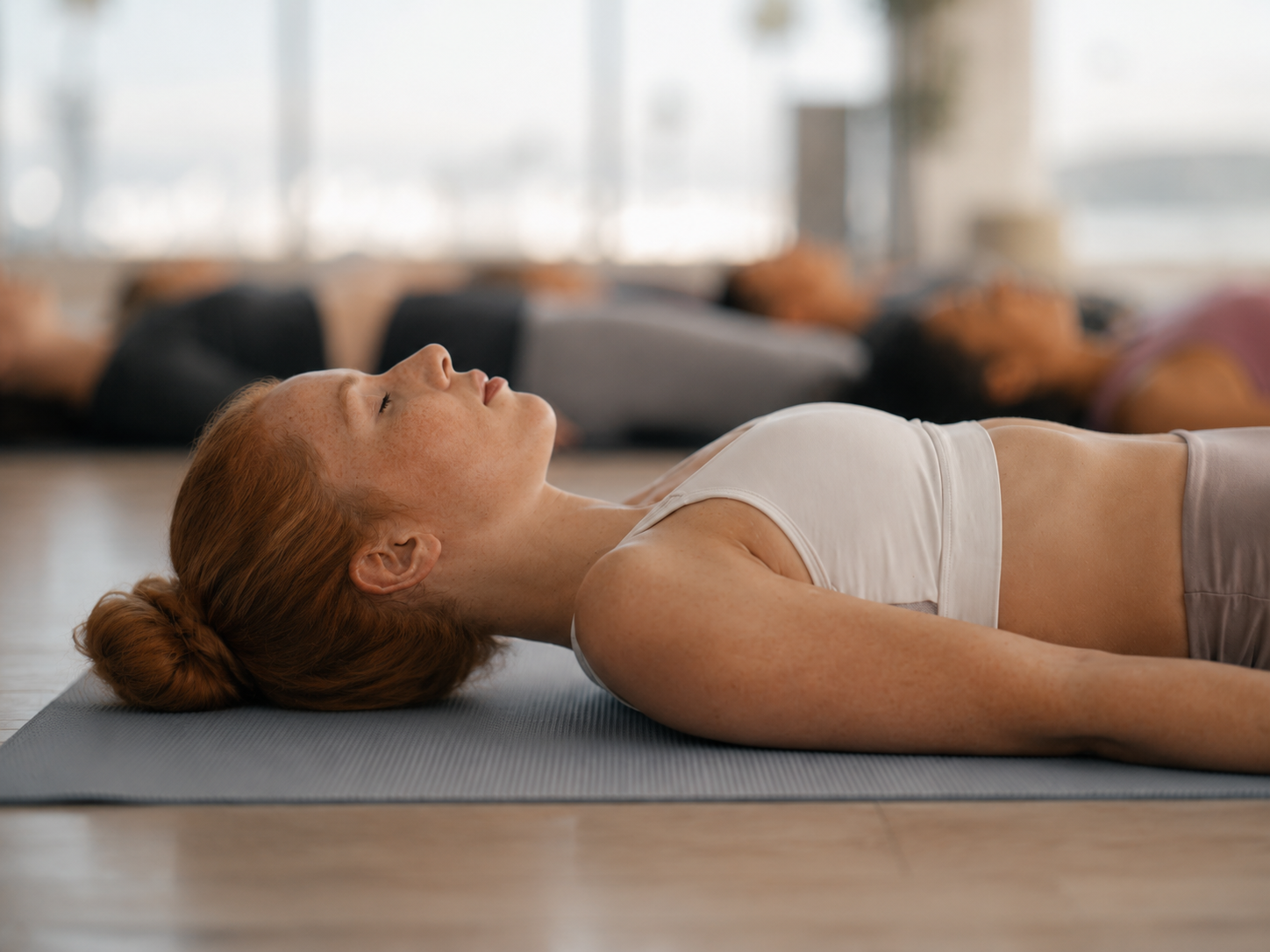
begin lying down — constructive rest (2–3 minutes)
lie on your back with your knees bent and your feet flat on the floor, hip-width apart. let your arms rest at your sides, palms facing up.
close your eyes if that feels comfortable. take three slow breaths, letting your exhale be slightly longer than your inhale. notice the weight of your body against the floor. you do not have to do anything yet. just arrive.
knees to chest — gentle compression (1 minute)
draw both knees toward your chest and wrap your arms around your shins. you might rock gently side to side, or simply stay still. this position gently massages the lower back and signals safety to the nervous system.
breathe here. let your belly soften.
supine twist — both sides (1–2 minutes each)
from knees to chest, let both knees fall slowly to one side. extend your arms out to a T shape and turn your gaze in the opposite direction of your knees.
this is not a pose to force. let gravity do the work. breathe into the space between your shoulder blades. stay for several breaths, then slowly bring your knees back to center and repeat on the other side.
cat-cow — moving with breath (1–2 minutes)
come to hands and knees, wrists under shoulders, knees under hips. on an inhale, let your belly drop toward the floor and lift your gaze gently — this is cow. on an exhale, round your spine toward the ceiling and let your head release — this is cat.
move slowly. let the breath lead the movement rather than the other way around. there is no correct speed. this is simply your spine waking up.
child's pose — rest (2–3 minutes)
from hands and knees, sink your hips back toward your heels and extend your arms forward or let them rest alongside your body. rest your forehead on the mat or on stacked fists.
stay here as long as you like. child's pose is not a transition — it is a destination. breathe into your back body. let yourself be held by the floor.
seated forward fold — gentle (1–2 minutes)
come to a seated position with your legs extended in front of you. flex your feet gently. on an exhale, hinge forward from your hips — not your waist — and let your hands rest wherever they land: on your shins, your ankles, or the floor beside your legs.
do not pull yourself forward. do not strain for your toes. simply let the weight of your upper body create a gentle opening in your hamstrings and lower back. breathe.
easy seat — closing (2–3 minutes)
come to a comfortable cross-legged position. rest your hands on your knees or in your lap. close your eyes.
take five slow, full breaths. with each exhale, see if you can release a little more of whatever you carried into this practice. you do not have to leave it all behind — but you are allowed to set some of it down.
when you are ready, open your eyes slowly. take a moment before you move into the rest of your day.
you showed up — that is enough
on the mornings when this practice feels like too much, you are allowed to do less. lie in constructive rest for five minutes. do one cat-cow. sit in child's pose and breathe.
movement does not have to be impressive to be meaningful. the act of turning toward your body with gentleness — especially when everything in you wants to push through or shut down — is one of the most healing things you can do.
a free resource to support your practice
if you would like a guided version of this flow to keep on your phone or print out, i have created a free gentle morning yoga guide — a simple, accessible resource you can return to whenever you need a soft place to begin.
download the free morning yoga flow →
you do not have to earn rest. you do not have to perform wellness. you just have to show up — and you already did.
Explore Topics
share this post
Written by
Shannon
Sharing through writing about trauma healing, nervous system regulation, yoga, reiki, holistic nutrition, and PCOS — through a trauma-informed lens.