gentle morning yoga for low-energy days
Some mornings your body needs movement, not a workout. Here's a trauma-informed morning flow for the days when everything feels heavy.
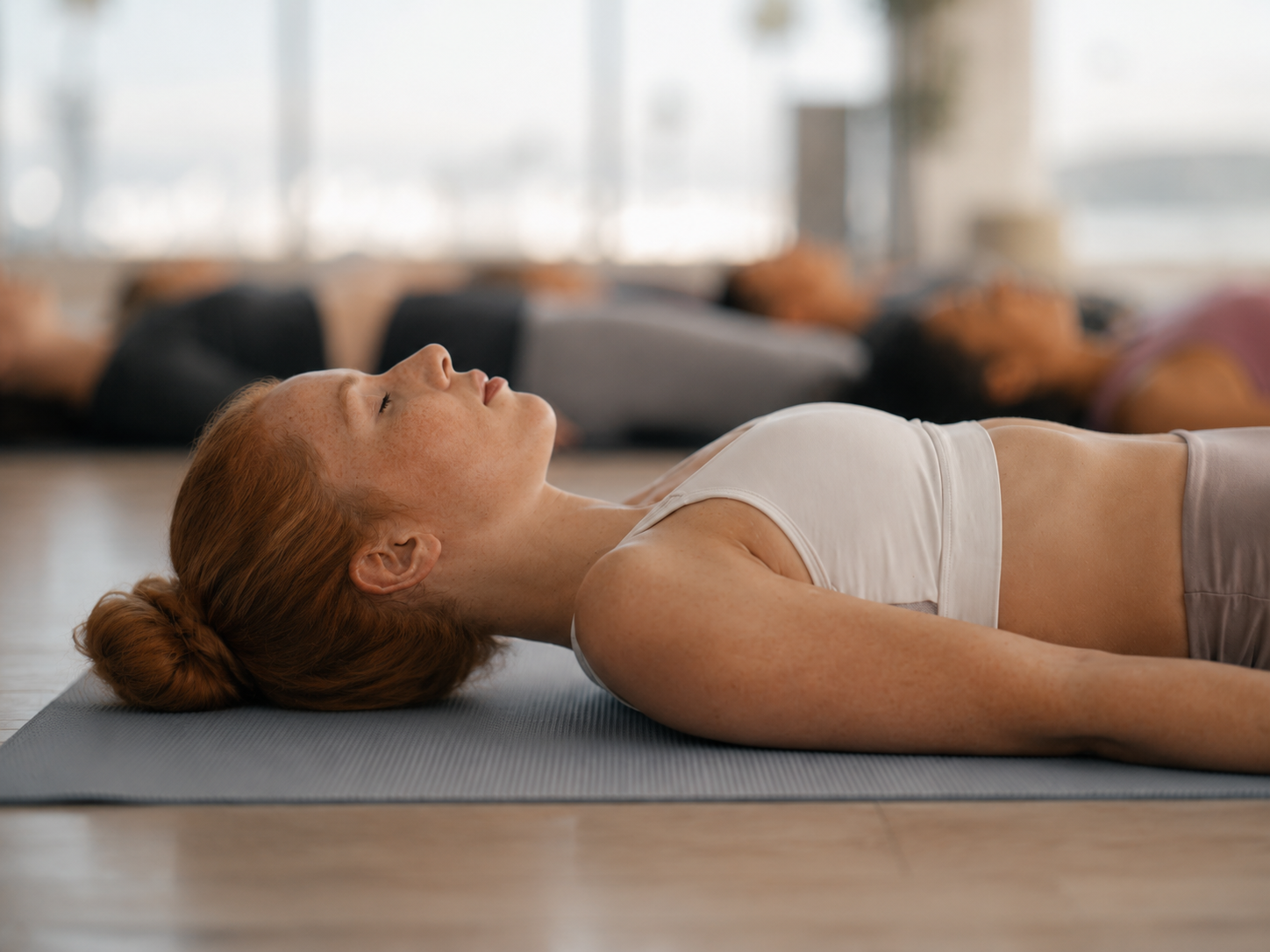
gentle morning yoga for low-energy days
Some mornings are hard before your feet even reach the floor. Your body feels heavy, your thoughts are already loud, and advice to “just do yoga” can land like one more impossible thing on a list you did not ask for.
This is not that kind of yoga.
You do not need to earn rest by moving first. You do not need to turn a depleted morning into a productivity project. This is simply an invitation to offer your body a little movement, if movement feels supportive today. A mat is optional. Pajamas are welcome. Stopping halfway through is allowed.
what makes yoga trauma-informed
Trauma-informed yoga centers consent, choice, and the reality that bodies have different histories. There is no pushing through pain, no forced shape, no one watching to see whether you did it correctly. You get to decide whether to close your eyes, keep your gaze soft, move smaller, use a wall or chair, or skip a pose entirely.
If mirrors make you self-conscious or activated, turn away from them. If a cue does not work for you, leave it behind. Your body is not here to perform. It is here to be listened to.
For this short flow, take what helps and leave the rest. You can spend one breath in each pose or stay for as long as feels kind.
a four-pose morning flow
child’s pose
Begin on your hands and knees, then ease your hips back toward your heels. You can place a pillow under your chest, keep your knees together or wide, or rest your forehead on stacked hands. If lowering down does not feel good, try a seated version at the edge of a chair, folding only as far as is comfortable.
Let your arms be wherever they want to be: extended, alongside your body, or supporting your head. Notice the places where you are held by the floor, bed, chair, or cushion. There is nothing to stretch into here. Just arrive.
cat-cow
Come back to hands and knees, or stay seated with your hands on your thighs. On an inhale, you might gently tip your chest forward and let your spine lengthen. On an exhale, you might round a little and let your head follow if that feels okay.
Make the movement tiny. You do not need to match a breath count or create a dramatic curve. If breath cues feel like pressure, move at your own pace. You might simply explore: what does it feel like to shift forward and back?
seated forward fold
Sit with your legs extended, crossed, or bent—whatever your body prefers. Place a blanket under your hips if that feels more supportive. Then let your upper body lean forward only to the point where you can still breathe easily.
You can rest your elbows on a pillow, hold onto your shins, or stay upright with your hands on your knees. A forward fold is not about reaching your toes. It is an option to soften toward yourself, with plenty of room to change your mind.
legs up the wall
Lie down with your legs resting up a wall, on a chair, or simply bent with your feet on the floor. Choose the version that asks the least of you. Place a pillow under your head or knees if you like.
Stay for three breaths, thirty seconds, or longer. If lying down makes you feel vulnerable, return to a seated position instead. Look around the room. Feel the surface beneath you. Let the pose be a pause, not a demand to relax.
let your body have the last word
When you are ready, roll to one side or press yourself up slowly. Notice whether anything has shifted—not because it has to, but because noticing is part of care. Maybe your shoulders are a fraction softer. Maybe nothing changed. Both are completely okay.
Gentle movement will not solve everything, and it does not need to. On low-energy days, choosing one compassionate action can be enough. Sometimes that action is a few quiet stretches. Sometimes it is returning to bed with a glass of water. Both can be care.
This flow pairs beautifully with the free Gentle Morning Yoga Flow PDF from the collection, if you would like a simple guide nearby. Come back to it when it serves you, and skip it when it does not.
Your body does not owe anyone a performance this morning. It only deserves your permission to be where it is.
Explore Topics
share this post
Written by
Shannon
Sharing through writing about trauma healing, nervous system regulation, yoga, reiki, holistic nutrition, and PCOS — through a trauma-informed lens.