what is reiki? a gentle beginner''s guide to energy healing
If you've been curious about Reiki, you're not alone. This gentle beginner's guide walks you through what Reiki is, what a session feels like, and why so many people have made it part of their wellness journey.
There are moments in life when words, medications, productivity hacks, and even our best intentions don't quite reach the place that feels wounded inside us.
Maybe you've been carrying stress for years. Maybe your nervous system never truly feels at rest. Maybe you're healing from grief, burnout, trauma, or simply trying to reconnect with yourself after a difficult season.
If you've found yourself curious about Reiki, you're not alone.
For many people, Reiki offers something increasingly rare in our busy world: permission to simply be.
Whether you're completely new to energy healing or you've heard about Reiki from a friend, this guide will walk you through what Reiki is, what it isn't, what a session may feel like, and why so many people have made it part of their wellness journey.
what is reiki?
Reiki (pronounced ray-key) is a gentle complementary wellness practice that originated in Japan in the early 1900s. The word combines two Japanese words:
- Rei — often translated as "universal" or "spiritual"
- Ki — the life energy believed to flow through all living things
Together, Reiki is commonly understood as "universal life energy."
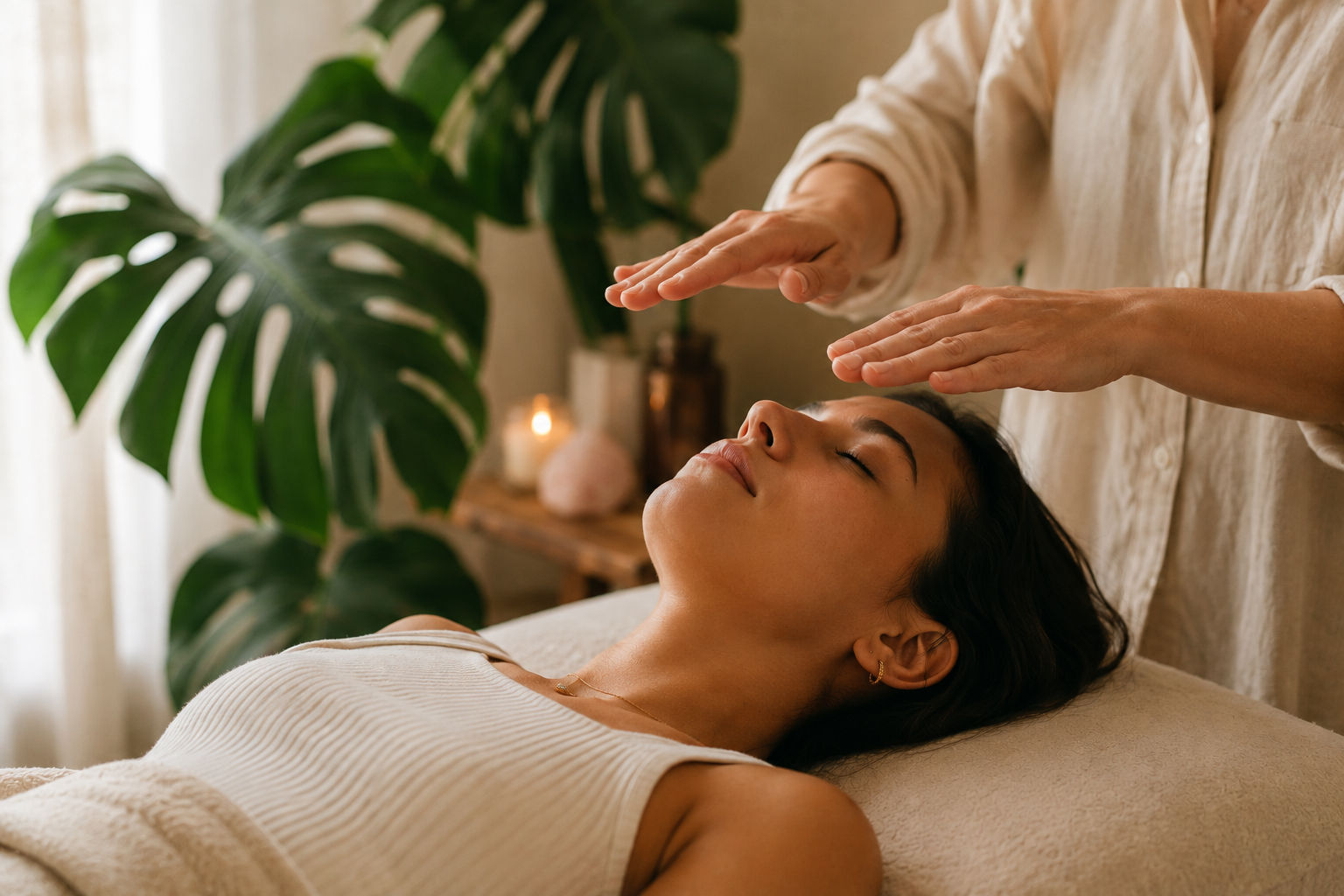
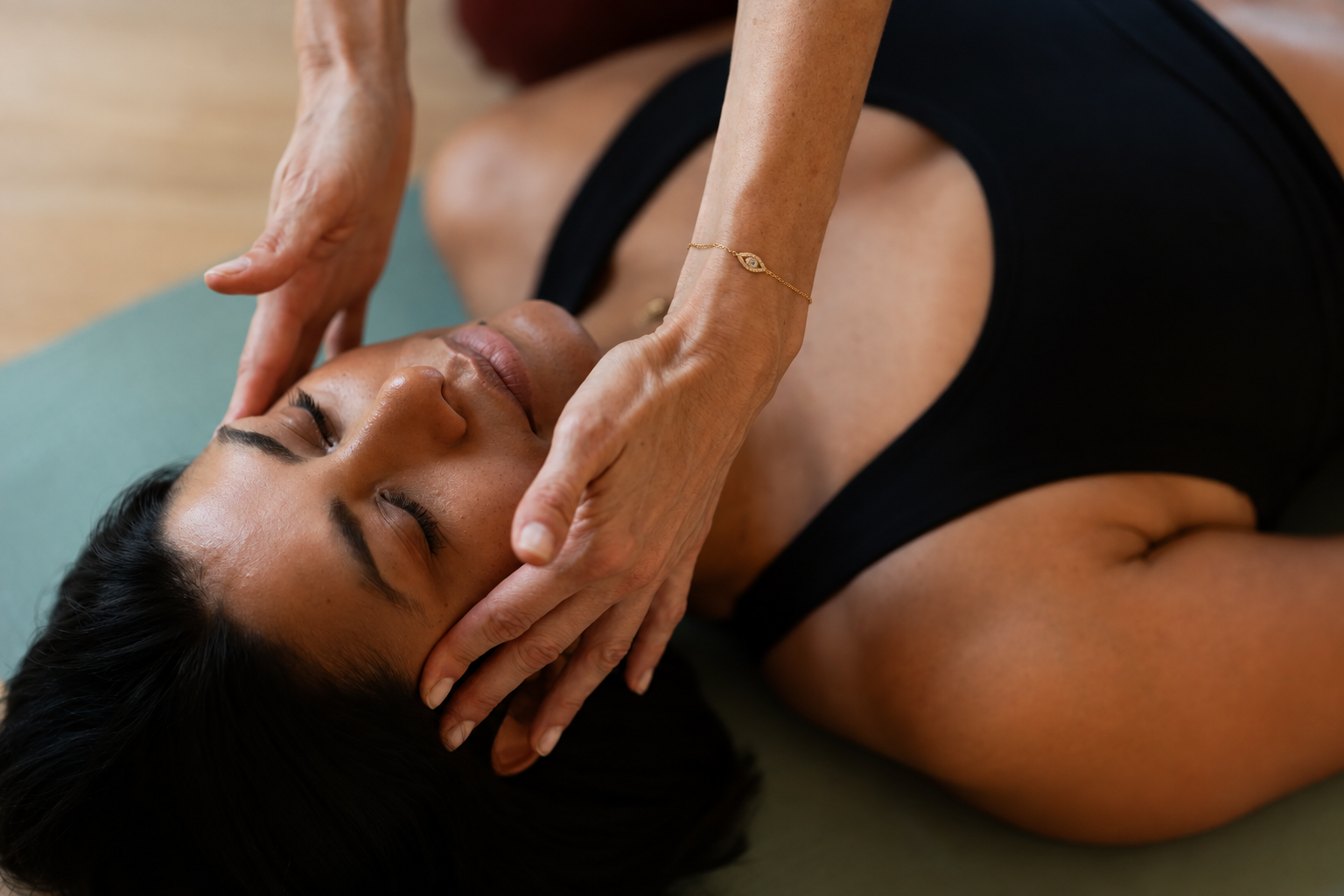
During a Reiki session, a trained practitioner places their hands lightly on or just above different areas of the body while creating a quiet, supportive environment intended to encourage relaxation and a sense of balance.
Unlike massage therapy, Reiki does not involve manipulating muscles or joints. Instead, practitioners describe themselves as facilitating the flow of energy while allowing the recipient's body to rest deeply.
Many people simply experience it as an opportunity to slow down and breathe.
is reiki a religion?
This is one of the biggest misconceptions.
Reiki is not a religion.
You don't need to belong to a particular faith, hold specific spiritual beliefs, or practice meditation to receive Reiki.
People from many different backgrounds — including Christians, atheists, agnostics, Buddhists, and people with no religious affiliation — choose Reiki for different reasons.
Some view Reiki through a spiritual lens.
Others see it simply as a deeply relaxing wellness practice.
Both experiences are valid.
how does reiki work?
This is perhaps the most common question — and one that deserves an honest answer.
Reiki practitioners believe that life energy flows through every living being. When that energy becomes disrupted or depleted, they believe it may contribute to feelings of imbalance or stress.
During a Reiki session, practitioners intend to support the natural flow of that energy.
From a scientific perspective, researchers have not established a biological mechanism that explains Reiki in the way practitioners describe it. However, some studies suggest Reiki may help promote relaxation and improve perceived well-being for some people. Many researchers believe that part of its benefit may come from the calming environment, focused attention, and activation of the body's relaxation response.
The important thing to know is this:
Reiki should be viewed as a complementary wellness practice — not a replacement for medical care, mental health treatment, or prescribed medications.
Many people choose to incorporate Reiki alongside therapy, yoga, meditation, nutrition, exercise, and traditional healthcare.
what does a reiki session feel like?
No two sessions are exactly alike.
Some people notice:
- Deep relaxation
- A feeling of warmth
- Gentle tingling
- Heaviness in the limbs
- Emotional release
- Vivid mental imagery
- A quiet mind
- Sleepiness
- A sense of peace
Others don't notice any physical sensations at all.
That doesn't mean the experience was "wrong."
Sometimes the greatest benefit is simply giving your nervous system permission to rest without needing to perform, solve, or fix anything.
what happens during a reiki session?
Every practitioner has their own style, but a typical session often includes:
A brief conversation
You'll have the opportunity to share how you're feeling, ask questions, and discuss any areas of concern.
Creating a calm environment
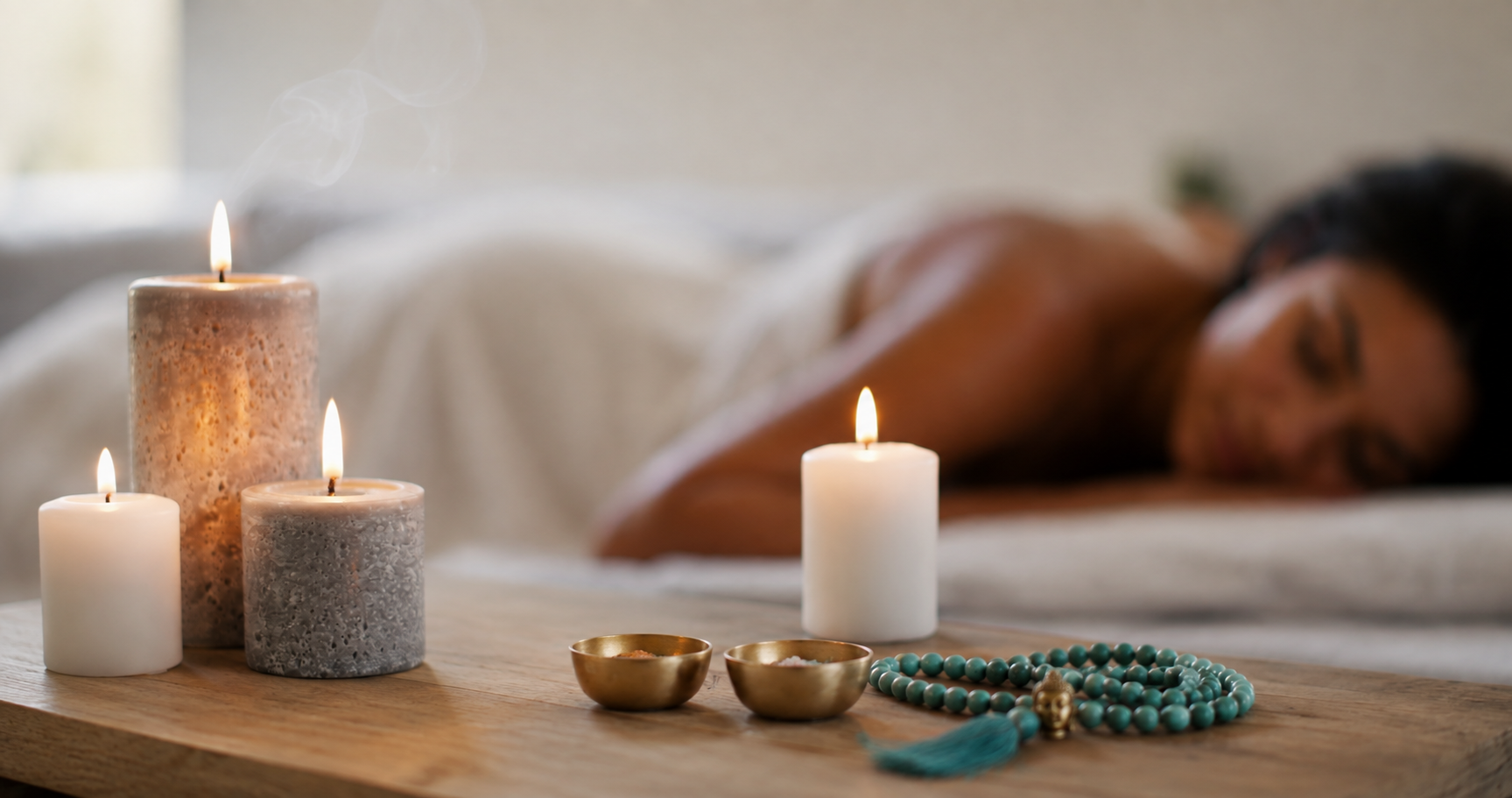
Many practitioners use soft lighting, relaxing music, blankets, or aromatherapy to help you feel comfortable.
The Reiki session
You'll usually lie fully clothed on a massage table while the practitioner places their hands lightly on — or just above — different areas of your body.
There is no need to "do" anything.
Many people simply focus on breathing.
Others drift into a deeply restful state somewhere between wakefulness and sleep.
After the session
You may feel calm, refreshed, emotional, peaceful, sleepy, or energized.
Drinking water, resting if needed, and taking a few quiet moments afterward can help you ease back into your day.
who can benefit from reiki?
People seek Reiki for many different reasons.
Some hope to support stress management, anxiety, burnout, emotional healing, grief, relaxation, better sleep, self-care, spiritual connection, and overall well-being.
While individual experiences vary, many people describe Reiki as creating a sense of calm that helps them better navigate everyday life.
common misconceptions about reiki
"You have to believe in Reiki for it to work."
Many practitioners would say belief isn't required. Some people approach Reiki with curiosity rather than certainty.
"Reiki is magic."
Reiki is generally described by practitioners as an energy-based wellness practice — not magic or supernatural entertainment.
"Reiki replaces medicine."
No. Reiki should complement — not replace — appropriate medical care. Always consult qualified healthcare professionals for diagnosis and treatment of medical conditions.
"Only gifted people can practice Reiki."
Most Reiki traditions teach that Reiki can be learned through training and practice rather than requiring someone to be born with a special gift.
why reiki resonates with so many people
Modern life asks us to move quickly.
To answer every notification.
To fix every problem.
To keep producing.
Reiki invites us into something different.
It reminds us that healing doesn't always happen through doing.
Sometimes healing begins when we finally feel safe enough to simply rest.
Whether you see Reiki as an energy practice, a mindfulness experience, or simply an hour dedicated to deep relaxation, its greatest gift may be the space it creates for you to reconnect with yourself.
a gentle reminder
If you're curious about Reiki, you don't have to understand everything before trying it.
Approach it with curiosity instead of expectation.
Notice how your body feels.
Pay attention to your breath.
Give yourself permission to slow down.
Healing looks different for everyone.
And sometimes, the smallest moments of stillness become the beginning of something beautiful.
continue reading
If you're interested in learning more, explore the next articles in our Reiki series:
- The History of Reiki: From Japan to the Modern World
- What Happens During Your First Reiki Session?
- Common Reiki Myths Debunked
- How to Become a Reiki Practitioner
- Starting a Heart-Centered Reiki Practice
- Reiki and Trauma-Informed Healing
Explore Topics
share this post
Written by
Shannon
Sharing through writing about trauma healing, nervous system regulation, yoga, reiki, holistic nutrition, and PCOS — through a trauma-informed lens.