crystals, energy, and the sacred beauty of the earth
Long before crystals became part of modern wellness culture, human beings were collecting, carving, wearing, and assigning meaning to stones. Whether you believe in their energy or simply love their beauty, crystals can invite a deeper relationship with the world beneath us — and the world within us.
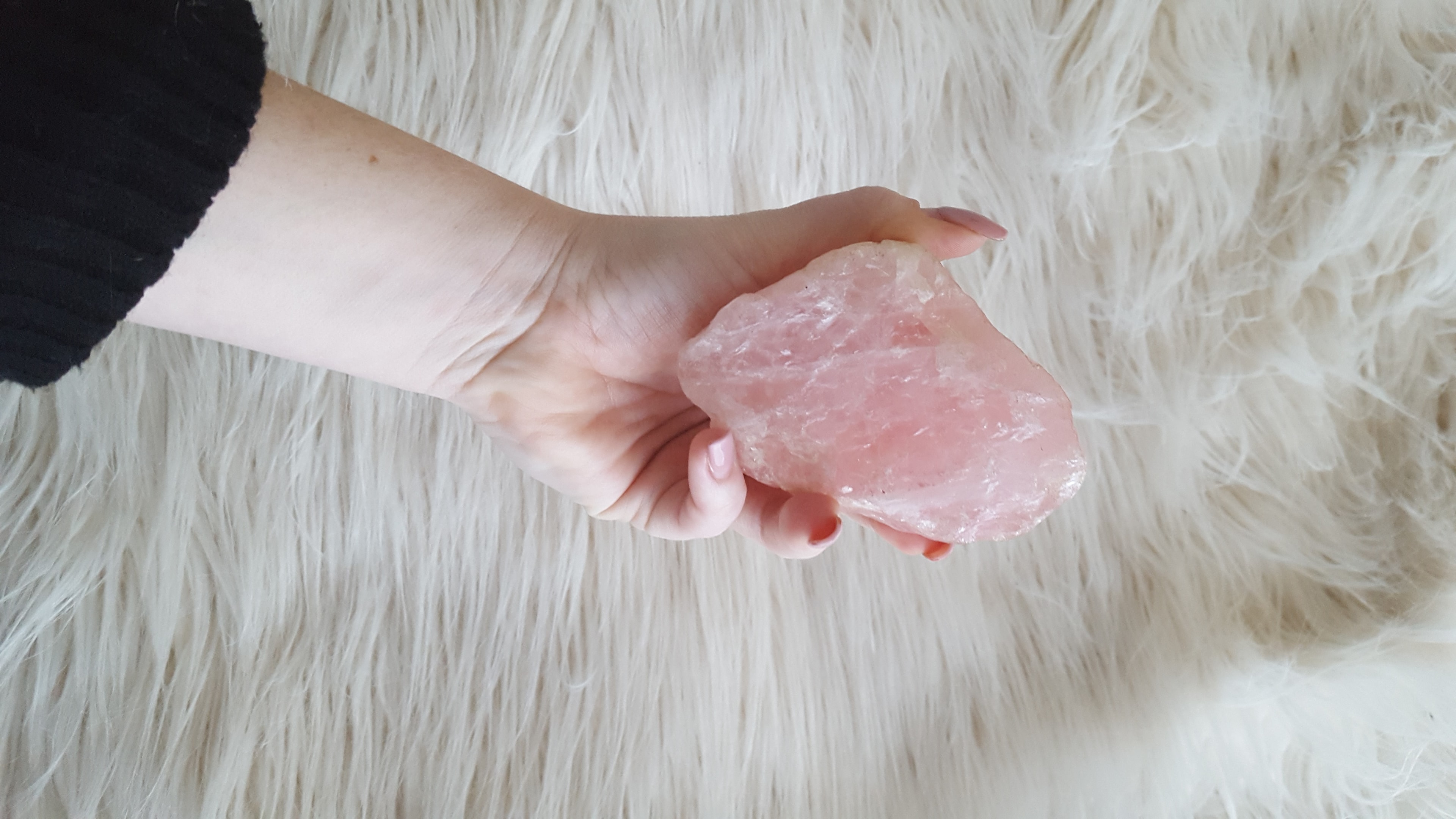
There is something undeniably captivating about holding a crystal in your hand.
Maybe it is the weight of it resting in your palm. The coolness against your skin. The tiny fractures catching the light. Or the almost unbelievable realization that something so intricate formed naturally beneath the earth over thousands — or even millions — of years.
Long before crystals became part of modern wellness culture, human beings were collecting, carving, wearing, exchanging, and assigning meaning to stones. Across different cultures and periods, minerals have represented protection, prosperity, spiritual connection, status, remembrance, and beauty.
Today, some people believe crystals can hold, direct, absorb, or amplify energy. Others simply appreciate them as meaningful objects created by the earth. You do not necessarily have to choose between spirituality and practicality to enjoy them. A crystal can be part of a deeply personal ritual while also being a beautiful mineral that reminds you to slow down, breathe, and reconnect with your intentions.
why do people believe crystals harness energy?
In spiritual traditions and modern metaphysical practices, crystals are often described as having their own energetic qualities. Clear quartz may be associated with clarity and amplification. Rose quartz is commonly connected with love and emotional tenderness. Amethyst is often used during meditation or rest, while citrine is associated with confidence, abundance, and forward movement.
The belief that crystals harness energy is partly inspired by their physical structure. Crystals are made of atoms arranged in organized, repeating patterns. Certain minerals, including quartz, also have measurable physical properties and are used in clocks, electronics, radios, and other technologies.
That scientific usefulness does not prove that crystals can heal the body, clear negative energy, or manifest a desired outcome. Current clinical evidence has not shown that healing crystals produce medical or anxiety-relieving effects beyond expectation and placebo responses. In a randomized study comparing rose quartz with a visually similar placebo, reported anxiety improvements occurred among believers regardless of which object they received.
But this does not mean the experience must be dismissed as meaningless.
The rituals surrounding an object can still help someone pause, concentrate, regulate their breathing, reflect on what they need, or create a moment of comfort. Research into ritual and placebo effects suggests that expectation, symbolism, sensory experience, and personal meaning can influence how we perceive our emotions and symptoms — even when the object itself is not providing a specific medical treatment.
A crystal may not medically cure anxiety, grief, trauma, or illness. It can, however, become a tangible reminder of an intention:
I am safe in this moment.
I am allowed to begin again.
I am making room for abundance.
I can treat myself with tenderness today.
Sometimes we need something physical to help us remember what we are trying to practice internally.
ancient stones, amulets, and sacred meaning
It may be more accurate to say that ancient cultures honored and used stones spiritually rather than saying they universally "worshipped crystals." Beliefs varied widely, and stones were often incorporated into amulets, jewelry, burial traditions, carved sacred objects, talismans, and ceremonial tools.
In ancient Egypt, amulets were believed to carry beneficial or protective properties. Their perceived power could be connected to the object's material, shape, color, inscription, and the words or actions performed over it. Semiprecious stones were commonly used, and their colors could hold symbolic meaning. Egyptian amulets were worn by the living and also placed among a person's burial wrappings for protection in the afterlife.
Ancient Greeks carved rock crystal into ornaments, while quartz, agate, amethyst, and other gemstones were used throughout the ancient Mediterranean world for jewelry, seals, rings, and talismans.
The Taíno people of the Caribbean also held spiritual beliefs involving zemís — powerful spirits understood to inhabit stones, trees, caves, and natural forces. Carved stone zemís could be connected with ancestors, fertility, rain, protection, and ceremonial life.
Across cultures, the recurring thread is not that everyone believed exactly the same thing. It is that people have long looked to the natural world for protection, symbolism, connection, and mystery.
We have always gathered meaning from the earth.
citrine: the merchant's stone
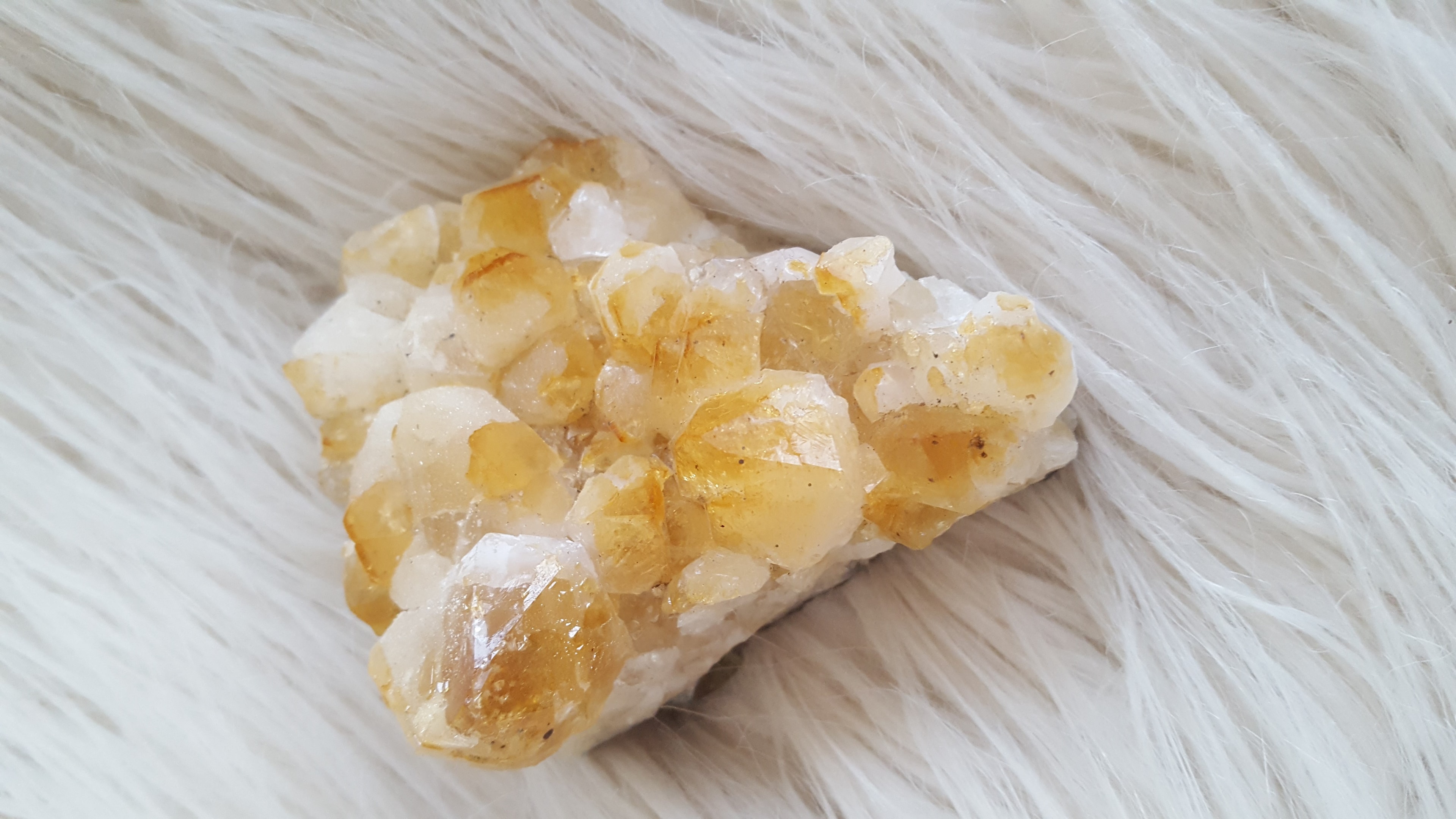
Golden, warm, and sunlike, citrine has become one of the best-known crystals associated with abundance.
Citrine is a yellow-to-orange variety of quartz. Natural citrine is relatively rare, and much of the citrine sold today is created by heat-treating amethyst or smoky quartz.
In gemstone folklore, citrine is often called the Merchant's Stone, Money Stone, or Stone of Abundance. It has traditionally been placed near money, in a cash register, at a workplace, or in a business as a symbol of prosperity and successful trade. It has also been associated with optimism, generosity, confidence, and creativity.
Of course, placing citrine beside your wallet will not replace budgeting, planning, hard work, or a solid business strategy. But it can become a meaningful cue.
Each time you see it, you might ask:
- Am I treating my creativity as something valuable?
- What opportunity am I ready to pursue?
- Where could I make a more confident decision?
- What does abundance mean beyond money?
- How can I care for what I already have?
That is where symbolic objects can become powerful — not because they control the future, but because they can help bring our attention back to the future we are consciously building.
rose quartz and the practice of tenderness
Rose quartz is commonly associated with love, compassion, emotional healing, and the heart.
Its soft pink coloring gives it an almost immediately comforting appearance. People may keep it near their bed, hold it during meditation, carry a smaller piece in a pocket, or place it beside a journal while working through grief or self-worth.
Rather than asking a stone to magically heal a wounded heart, rose quartz can represent the way we choose to meet that wounded heart.
You might hold it and say:
I do not have to punish myself for being human. I am worthy of tenderness, including tenderness from myself.
The stone does not have to do the emotional work for you. It can simply remind you how you want to approach that work.
burning sage and clearing energy
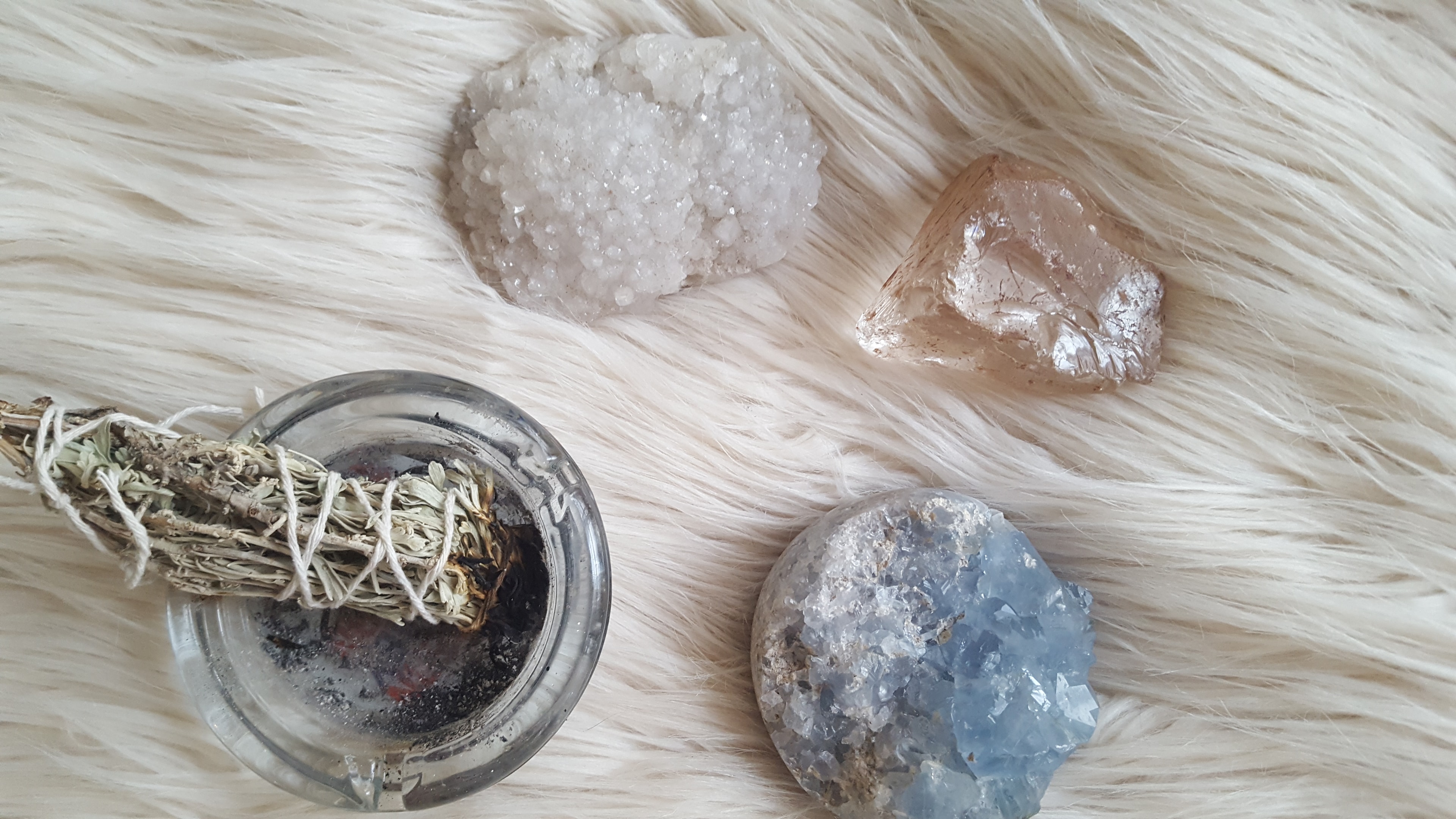
Crystals, herbs, smoke, and natural elements can become part of a personal ritual when approached with intention, safety, and cultural respect.
Burning aromatic plants has appeared in many spiritual, religious, and domestic traditions. Smoke, incense, herbs, resins, and candles have been used to mark transitions, accompany prayer, prepare sacred space, honor ancestors, and create a sensory shift in the environment.
However, smudging has a specific cultural meaning.
Smudging is a sacred Indigenous ceremonial practice within many First Nations and Native communities. Depending on the nation and tradition, it may involve sage, cedar, tobacco, or sweetgrass and can be used for grounding, prayer, purification, connection, or preparing for an important gathering. Traditions and protocols differ between communities, and a formal ceremony may be led by an Elder or knowledgeable cultural practitioner.
Because of that, a non-Indigenous person burning an herb at home may choose to call their practice smoke cleansing, herbal cleansing, or simply burning sage with intention, rather than presenting it as an Indigenous smudging ceremony.
This is not about removing beauty or spirituality from a personal practice. It is about honoring the people whose sacred ceremonies have survived despite colonization, suppression, and commercialization.
A simple home smoke-cleansing ritual might involve opening a window, safely lighting an ethically sourced herb or incense, and moving slowly through your space while reflecting on what you are ready to release.
You might say:
May this home hold peace. May what no longer serves me be released. May I move forward with clarity, care, and protection.
Keep water nearby, use a fire-safe container, never leave burning material unattended, and avoid smoke around children, pets, people with asthma, or anyone with respiratory sensitivities.
You also do not need smoke to cleanse a space. Sound, fresh air, prayer, sweeping, bells, music, candlelight, salt, or simply cleaning with focused intention can create the same sense of renewal.
is it a ritual or a ceremony?
The words are sometimes used interchangeably, but they can hold different weight.
A ritual is generally a repeated or intentional action that carries personal or symbolic meaning. Lighting a candle before journaling, choosing a crystal for the day, taking three breaths before leaving home, or placing a stone beside your bed can all become personal rituals.
A ceremony is often more structured and may be connected to a specific cultural, spiritual, religious, family, or community tradition. Ceremonies may include established teachings, prayers, protocols, leaders, or responsibilities passed between generations.
A private practice with crystals may be a ritual. An Indigenous smudging practice carried out according to a community's teachings may be a ceremony.
The difference is not always the size or complexity of the act. It is the meaning, lineage, context, and responsibility surrounding it.
how crystals are used today
Modern crystal practices vary from deeply spiritual to entirely decorative.
People may:
- Hold crystals during meditation or breathwork.
- Keep a stone on an altar or sacred shelf.
- Wear gemstone jewelry.
- Carry a small crystal as a grounding object.
- Place stones near a workspace or journal.
- Use them as visual reminders of goals and intentions.
- Collect minerals for their geological beauty.
- Incorporate them into Reiki, energy work, yoga, or spiritual reflection.
- Display them simply because they are beautiful.
There is no requirement to believe that a stone possesses supernatural power before you are allowed to enjoy it.
You may believe crystals carry spiritual energy. You may see them primarily as symbols. You may simply love their colors, formations, textures, and connection to the earth.
All three relationships can hold meaning.
the benefits of crystals and minerals
Crystals should never replace medical care, mental-health treatment, medication, or professional support. Claims that a particular stone can cure disease, detoxify the body, balance hormones, or heal trauma should be approached with caution.
Their more grounded benefits may include:
a focus for meditation
Holding an object can give the mind somewhere gentle to return when thoughts wander.
a reminder of personal intention
A stone beside your computer might remind you to remain calm during a difficult conversation. One in your pocket might remind you to breathe before reacting.
sensory grounding
The texture, temperature, weight, and edges of a mineral can help bring attention back into the present moment.
connection with nature
Even indoors, crystals remind us that we are surrounded by materials formed through natural processes far older than our immediate worries.
beauty and curiosity
Minerals are extraordinary. They invite us to learn about geology, color, pressure, heat, time, and the unseen processes occurring beneath our feet.
meaningful ritual
Selecting a crystal, lighting a candle, opening a journal, or sitting quietly can create a boundary between the noise of daily life and a moment of reflection.
The benefit may not be that the crystal changes your life for you.
The benefit may be that it helps you become still enough to notice how you want to change your life.
a simple crystal and smoke-cleansing ritual
You will need:
- A crystal or mineral that feels meaningful to you
- A candle
- A journal
- An optional ethically sourced herb, incense, or smoke-free cleansing tool
- A fire-safe dish if burning anything
Begin by opening a window or creating a little space around yourself.
Place both feet on the floor. Take a slow breath and notice the support beneath your body.
Hold your crystal and observe it before assigning any meaning to it. Notice its temperature, color, texture, weight, and imperfections. Consider how long it may have existed before reaching your hand.
Light your candle. If using smoke, allow it to move gently through the room while practicing appropriate fire safety. You can also ring a bell, play calming music, or simply imagine the room filling with fresh, clear light.
Ask yourself:
What am I ready to release?
Pause.
Then ask:
What am I ready to welcome?
Write whatever comes forward without forcing an answer.
Choose one small action that supports your intention. Place the crystal somewhere you will see it as a reminder.
Close with:
May I release what has grown heavy. May I protect what is still tender. May I remember that I belong to the earth, too.
the beauty beneath our feet
Perhaps the most magical thing about crystals is not something we have to prove.
It is the fact that the earth creates them at all.
Through pressure, heat, minerals, water, and unfathomable stretches of time, the planet forms rose-colored quartz, golden citrine, violet amethyst, delicate geodes, shimmering calcite, blue celestite, black obsidian, green malachite, and countless other wonders.
They remind us that beauty can form in darkness.
That pressure can reshape without always destroying.
That transformation may be happening long before it becomes visible.
Whether you believe crystals transmit energy, help focus intention, carry ancient symbolism, or simply reflect the breathtaking creativity of nature, they can invite a deeper relationship with the world beneath us — and the world within us.
Sometimes healing begins with something very small:
A quiet room.
An open window.
A stone in your hand.
And the willingness to become present again.
Explore Topics
share this post