finding stillness: what meditation really is (and how to start without feeling like you're doing it wrong)
Meditation isn't about emptying your mind. It's about changing your relationship with your thoughts — and you can start with just two minutes.

Sometimes the hardest part of meditation isn't sitting quietly — it's believing your mind is allowed to slow down.
If you've ever tried meditation and thought:
"I can't stop thinking."
"This is making me more anxious."
"I'm terrible at this."
You're not alone.
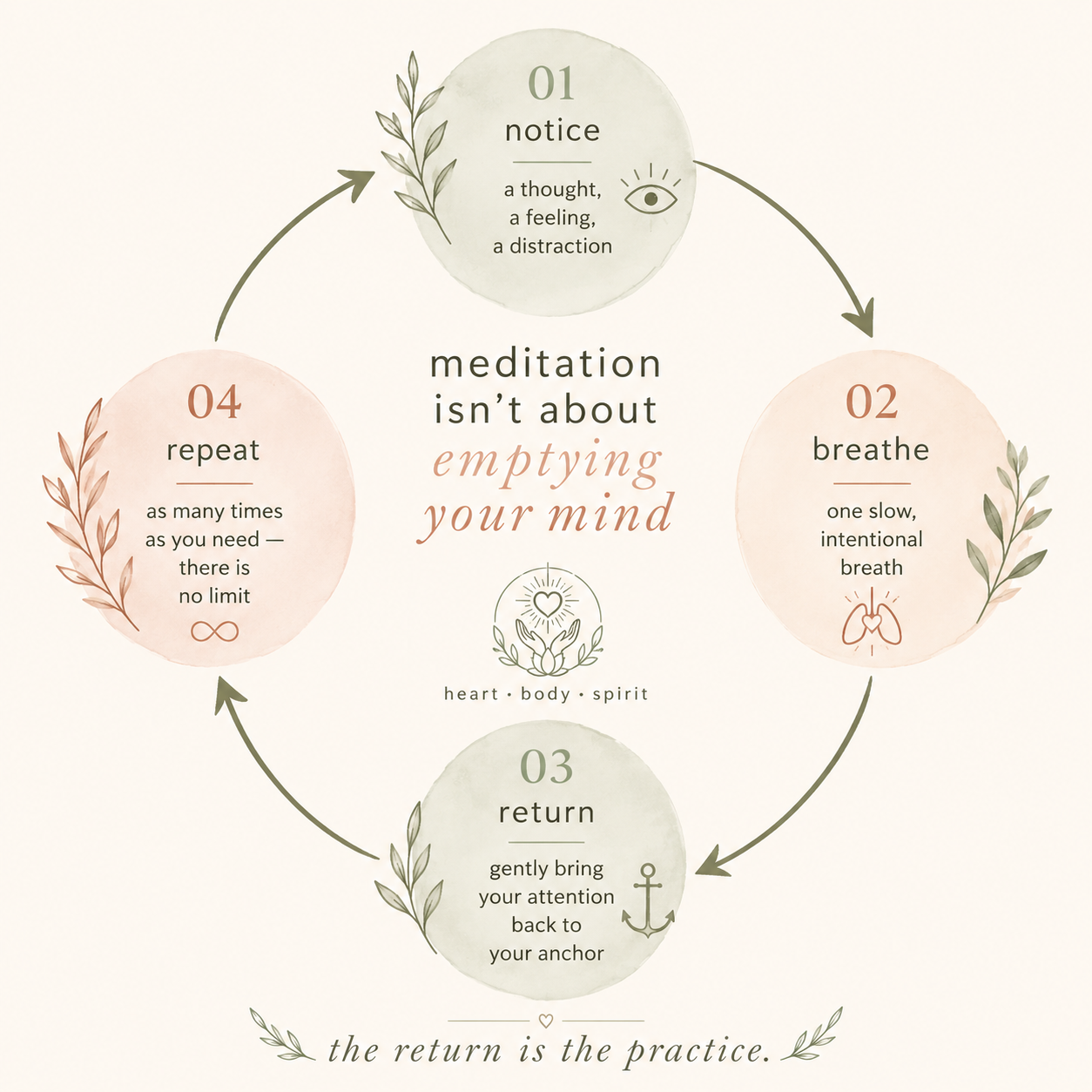
One of the biggest misconceptions about meditation is that your mind is supposed to become completely silent. In reality, meditation isn't about eliminating your thoughts. It's about changing your relationship with them.
Whether you're navigating chronic stress, trauma, anxiety, PCOS, burnout, or simply the constant noise of everyday life, meditation offers something surprisingly simple:
A chance to come home to yourself.
what is meditation?
Meditation is the practice of intentionally paying attention.
Sometimes that's your breath.
Sometimes it's the sounds around you.
Sometimes it's your body.
Sometimes it's simply noticing your thoughts without immediately believing them.
Rather than trying to force your mind to be empty, meditation teaches you to observe your inner experience with curiosity instead of judgment.
Think of your thoughts like clouds moving across the sky.
You don't have to chase every cloud.
You also don't have to make them disappear.
You simply notice them... and let them pass.
meditation isn't about perfection
This is probably the most important thing I can tell you.
If your brain wanders every fifteen seconds...
You're still meditating.
If you spend five minutes gently bringing your attention back to your breath over and over...
You're still meditating.
That gentle return is the practice.
Every time you notice your mind wandering and choose to come back, you're strengthening the same parts of the brain involved in emotional regulation, attention, and resilience.

why meditation helps your mind and body
Meditation isn't just "woo-woo."
Over the past several decades, researchers have found that regular meditation may help:
- lower cortisol (the body's primary stress hormone)
- improve emotional regulation
- increase attention and focus
- reduce symptoms of anxiety and depression
- improve sleep quality
- support healthy blood pressure
- decrease nervous system activation
- improve self-awareness
- increase compassion toward yourself and others
For people living with trauma, chronic stress, or conditions like PCOS, lowering chronic stress can also support overall hormonal health — because elevated cortisol can contribute to inflammation and insulin resistance.
Meditation isn't a cure.
But it can become one meaningful piece of a much larger healing journey.
the heart body spirit approach
At Heart Body Spirit, I don't believe healing happens through one practice alone.
Meditation is one piece of the puzzle.
heart
Meditation teaches us to witness our emotions instead of becoming overwhelmed by them. Over time, many people notice they respond more intentionally instead of reacting automatically.
body
Stress lives in the body. Meditation activates the parasympathetic nervous system — the "rest and restore" state — which can help lower muscle tension, slow breathing, and support recovery after long periods of stress.
spirit
Whether you consider yourself spiritual, religious, or simply curious, meditation creates space for quiet. Sometimes that quiet becomes clarity. Sometimes it becomes acceptance. Sometimes it simply becomes rest.
All of those are enough.
how to start meditating
You don't need expensive cushions.
You don't need incense.
You don't need to sit perfectly still.
Here's a simple place to begin.

step one: find a comfortable position
Sit in a chair. Sit on the floor. Lie down if needed. Comfort matters more than looking like you're meditating.
step two: take three slow breaths
Breathe in through your nose. Exhale slowly. Don't force deep breathing. Simply notice your breath.
step three: pick one thing to notice
Your breathing. A candle. The feeling of your feet touching the floor. The sounds outside. Choose one anchor.
step four: let your mind wander
Because it will. When you notice you've drifted into grocery lists, work emails, or awkward conversations from six years ago... smile if you can. Then gently come back. No criticism. No starting over. Just return.
step five: start with two minutes
Yes. Two. Consistency matters far more than duration. A daily two-minute practice will usually benefit you more than one thirty-minute meditation once a month.
different ways to meditate
One of the beautiful things about meditation is that there isn't just one right way to do it.
You might enjoy:
- mindfulness meditation — observing the present moment
- guided meditation — following a teacher's voice
- body scan meditation — bringing awareness to each area of your body
- loving-kindness meditation — practicing compassion toward yourself and others
- walking meditation — moving slowly while paying attention to each step
- breath meditation — simply noticing each inhale and exhale

Experiment. Your favorite style may surprise you.
when meditation feels hard
For some people — especially trauma survivors — closing your eyes and sitting still may initially feel uncomfortable.
That's okay.
You don't have to force yourself.
Instead, you might try:
- keeping your eyes open
- looking softly at a candle or houseplant
- walking outside while focusing on your footsteps
- holding a comforting object
- listening to a guided meditation
Healing should feel supportive — not punishing.
you don't need to empty your mind
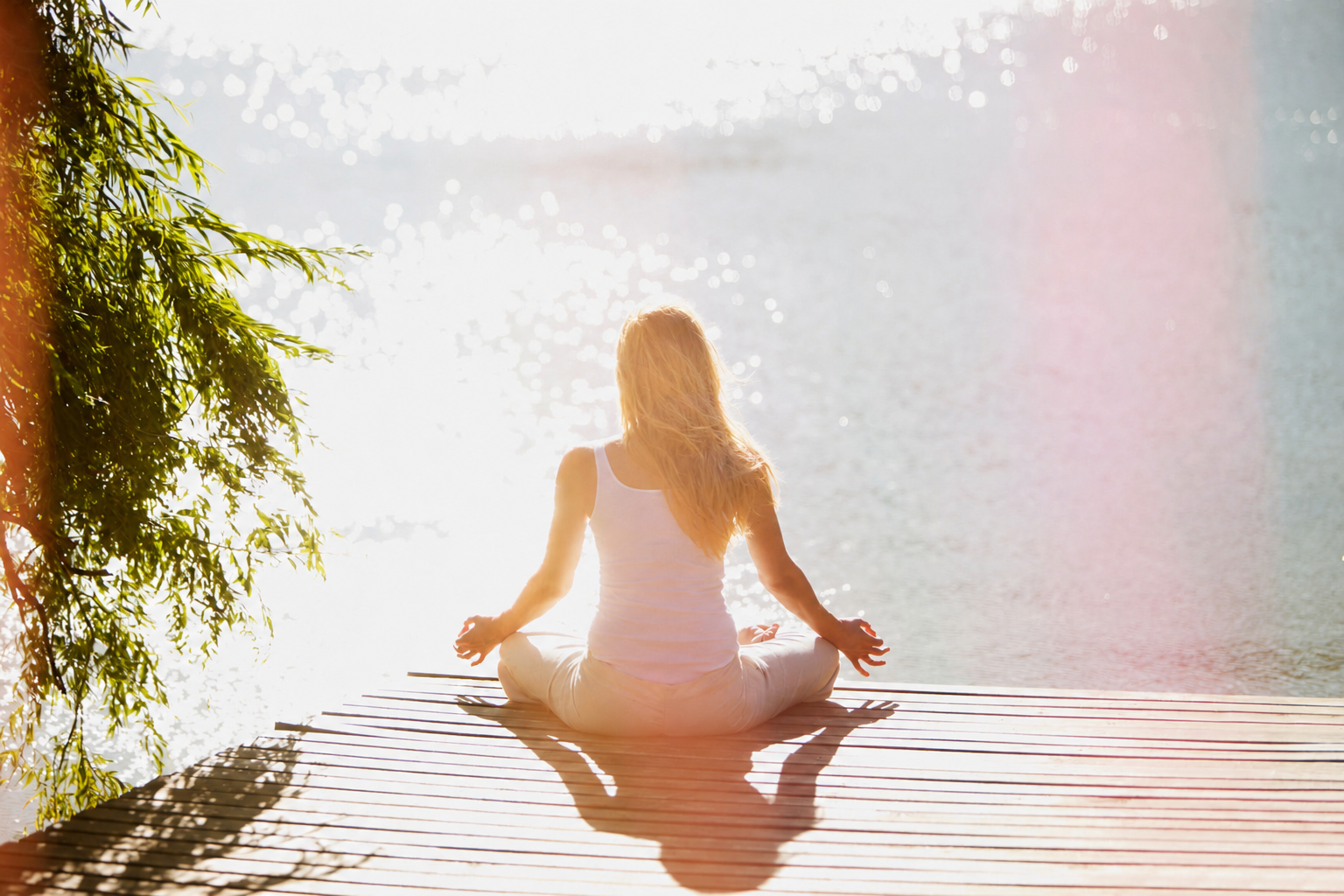
You only need to notice it.
The goal isn't to stop thinking.
The goal is to realize you are more than your thoughts.
And maybe...
Just maybe...
For a few quiet moments each day...
You'll remember that beneath all the noise, your heart already knows how to be still.
a gentle invitation
If you're new to meditation, start with just two minutes today.
Not because you have to become a different person.
But because you deserve a few moments where nothing is expected of you.
One breath.
One moment.
One small act of coming home to yourself.
continue your healing journey
If this post resonated with you, you might also enjoy:
- the free somatic check-in guide — a gentle body awareness practice to help you reconnect with yourself one question at a time
- the healing boundaries workbook — trauma-informed support for identifying and holding boundaries as part of your recovery
Explore Topics
share this post
Written by
Shannon
Sharing through writing about trauma healing, nervous system regulation, yoga, reiki, holistic nutrition, and PCOS — through a trauma-informed lens.